
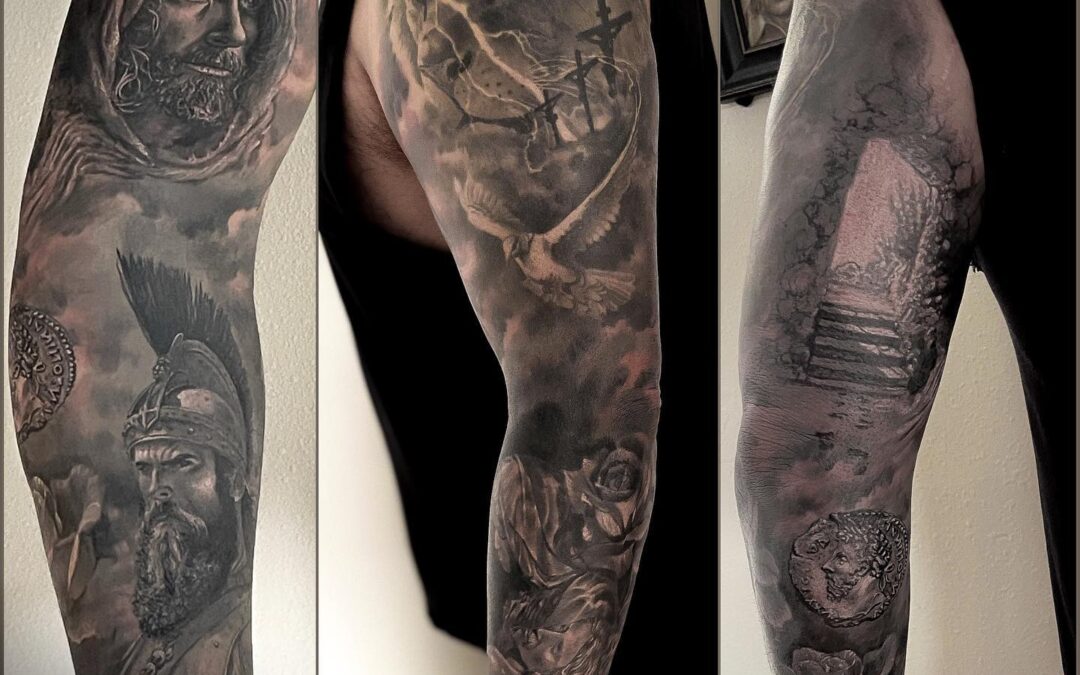
A successful cover-up tattoo is more than just a new design—it’s a complex puzzle that requires a deep understanding of ink chemistry, color theory, and skin anatomy. While the goal is to hide the old ink, not every idea is suited for the task.

The Foundation: Flow and Texture
A great cover-up uses the flow of the body and organic textures to disguise the old image. Designs with a lot of detail, such as realistic animals, dense floral patterns, or complex bio-mechanical and surrealist textures, are excellent candidates. These elements provide “visual noise” that distracts the eye, making it nearly impossible to trace the old lines underneath.
The Myth of “Anything Will Work”
The biggest misconception is that a new tattoo acts like a coat of opaque paint. In reality, tattoo ink is transparent. When we place new ink over old ink, the two colors combine.
If you have a dark, saturated tattoo and try to cover it with a light, airy design—like a pale sky or a portrait with lots of skin tones—the old tattoo will eventually “ghost” through once the new ink settles. This is why not all ideas are capable of hiding dark areas; you need depth and saturation to truly mask what was there before.

What Doesn’t Work
- Negative Space: If your new design relies on large areas of open skin or “white space,” the old tattoo will be fully visible in those gaps.
- Fine Line Work: Thin, delicate lines are rarely enough to distract from a heavy, bold piece of old ink.
- Incompatible Colors: Trying to cover a dark blue or black tattoo with light yellow or pink usually results in a muddy appearance rather than a clean cover-up.
Planning for Success
Successful cover-ups often need to be significantly larger than the original piece. This allows the artist to use the darkest parts of the new design to anchor over the old ink, while using the surrounding clean skin to create “leverage” for the new composition.
By being flexible with your subject matter and trusting the process of color saturation, you can turn a piece of “permanent” regret into a new work of art that looks like it was meant to be there all along.
To see more examples of my transformations, visit the Tattoo Gallery. I am currently taking on cover-ups on a case-by-case basis—be sure to mention your ideas when you schedule your appointment. Now Tattooing at Real Gone Denver