
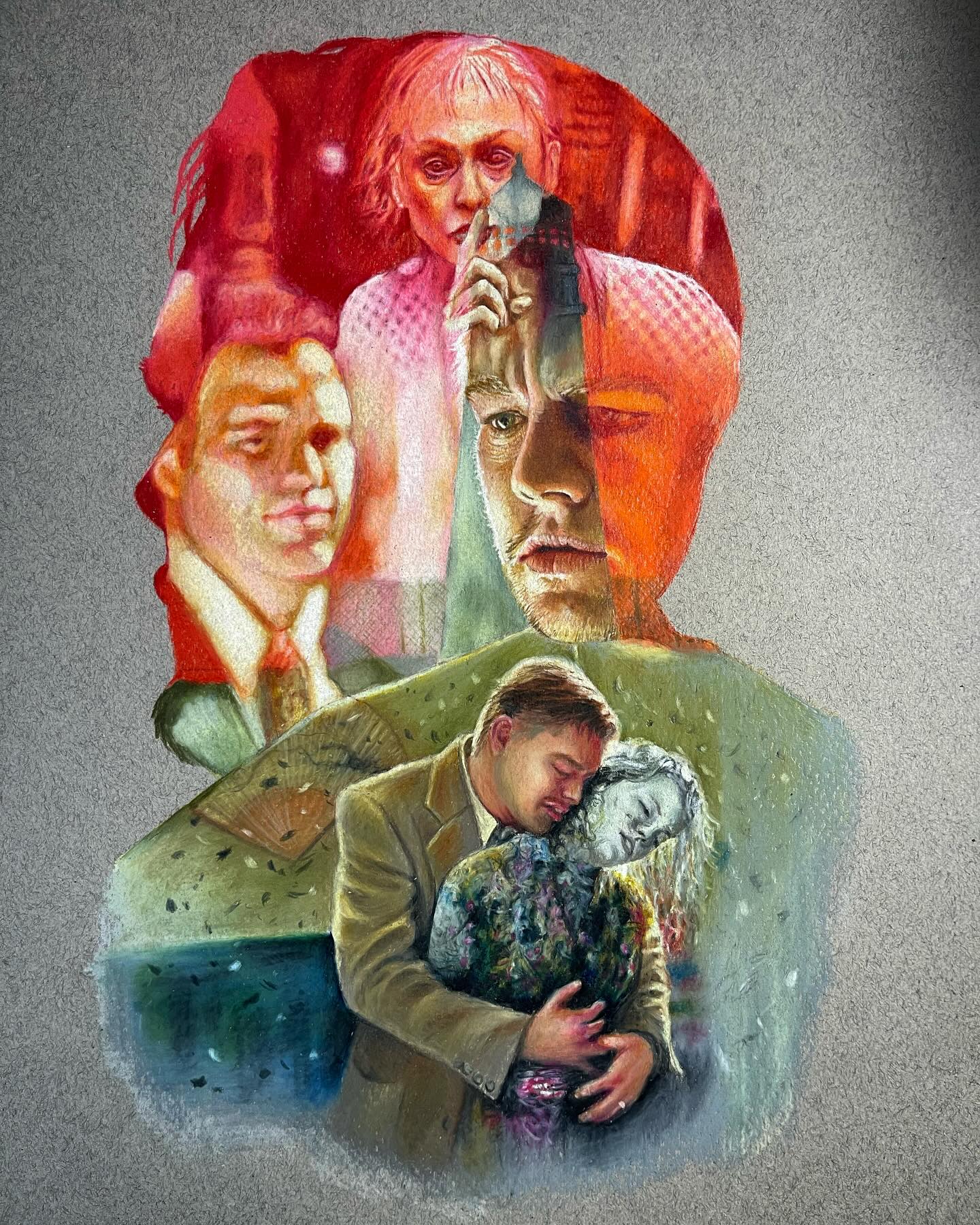
This is an endeavor I’ve been wanting to explore for a long time now. I really hadn’t sat down with colored pencils seriously in my adult life, but I knew I’d enjoy the process. Still, I completely underestimated both how engaging and, frankly, how frustratingly challenging this medium can be. But I’m hooked—I’m definitely dedicating more time to it!
The initial draw is the sheer control. As an artist, there’s nothing quite like the feeling of having pigment literally at your fingertip, meticulously guiding a line or building a wash of color. It’s the ultimate slow-art process. When you finally achieve that vibrant saturation and the light hits the paper just right, making the subject pop—that’s the reward. It feels like a quiet, yet powerful, victory.
But let’s be real about the learning curve. The difficulty of colored pencil work lies in its demands for patience and precision.
A Tattoo Artist’s Perspective: The Layering Parallel
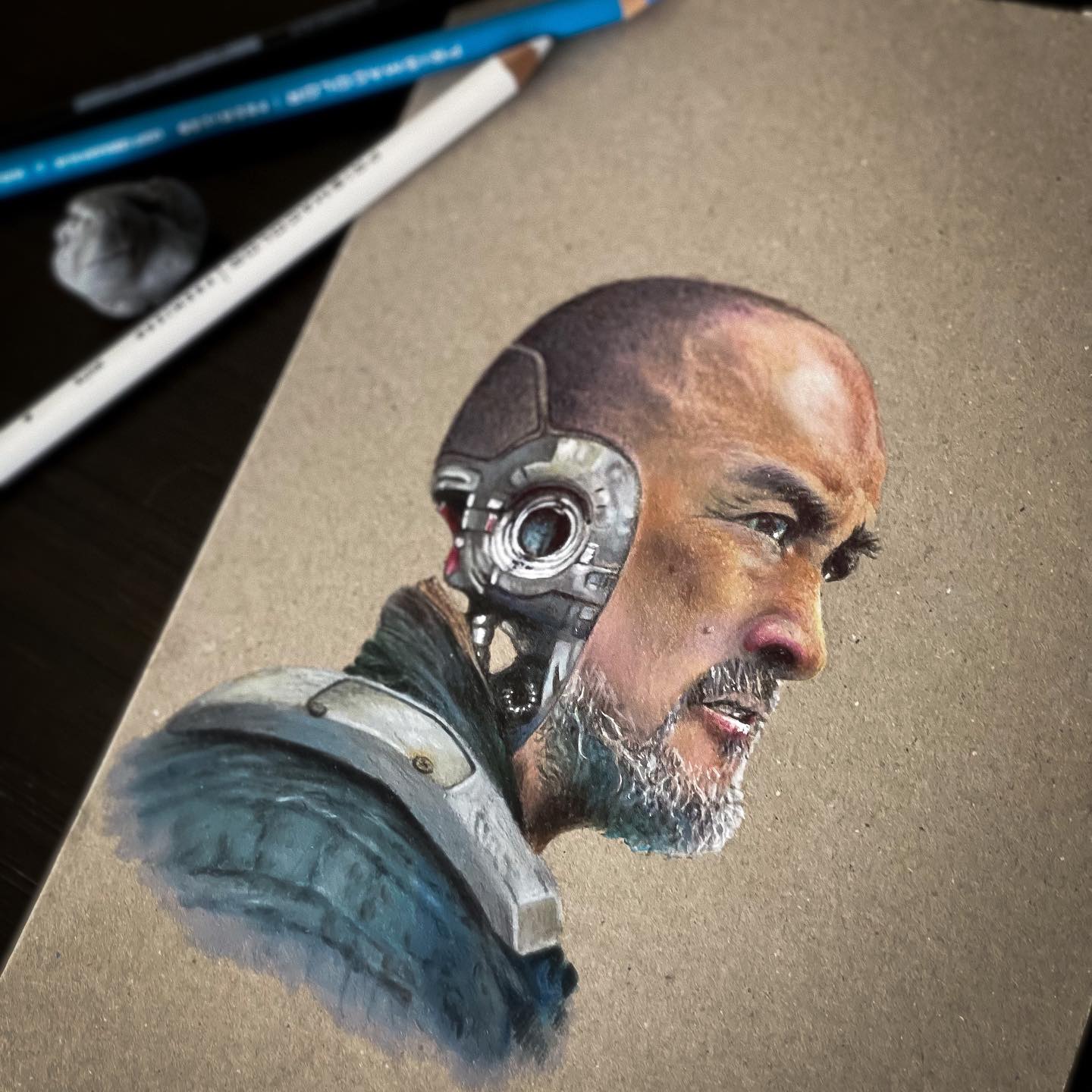
Coming from a background as a tattoo artist, I actually find the process oddly familiar, which is probably why I’ve taken to it so quickly. The layering process in colored pencil is highly comparable to color packing and blending in tattooing.
- Layering as Strategy: Just like tattooing, you can’t just mash color onto the “canvas.” You have to strategize your entire piece in thin, light layers. If you press too hard too early, you burnish the paper prematurely—flattening the tooth—and suddenly you can’t add any more color. That’s the equivalent of overworking the skin; once you blow out or scar that area, you’ve hit a technical roadblock. It forces you to think three steps ahead, building up value and hue gradually.
- Achieving Smooth Blends: That beautifully seamless color transition in both media is hard-won. In both tattooing and drawing, you need meticulously controlled hand speed and pressure to get the pigments to blend optically without leaving harsh edges or patchy spots. When a blend finally clicks, it’s incredibly satisfying, but it takes serious finesse—the kind of delicate touch you develop holding a tattoo machine or a fine pencil.
- The No-Undo Policy: Unlike digital work, there’s no easy Ctrl+Z. If you misplace a dark shadow or over-saturate an area, correcting it is a painstaking process of lifting pigment. Just like tattooing, this medium demands a higher standard of focus and planning from the first stroke because your mistakes are permanent, or at least very, very difficult to fix.
Ultimately, colored pencils force me to slow down and truly study the subject—analyzing color and light not as a quick splash, but as a series of deliberate, incremental decisions. It’s a demanding process, but the results speak for themselves.
Commissioning Creative Vision
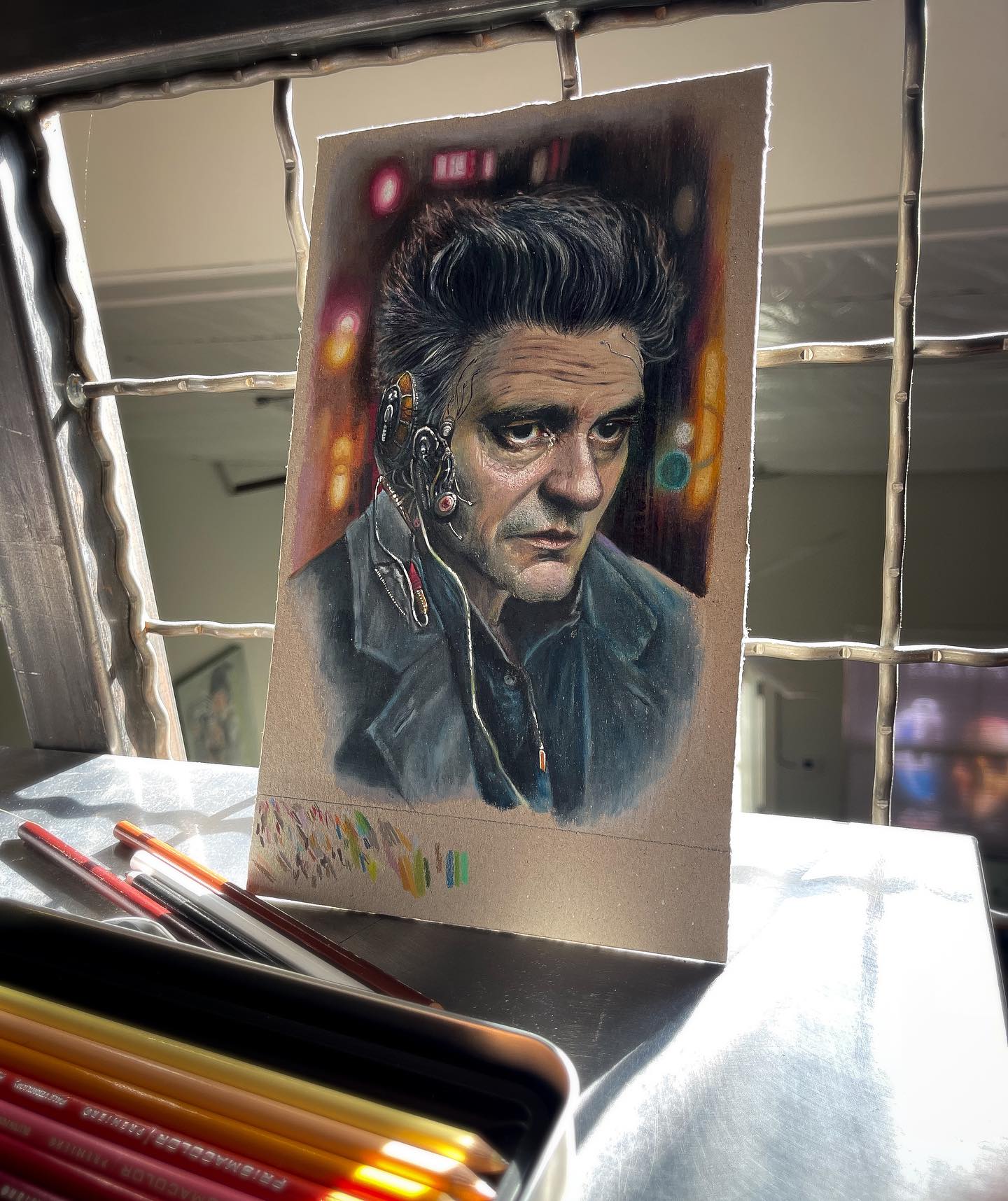
I’ve decided to take on a few select commission pieces. I’m looking for opportunities where I can really flex the strengths of colored pencils—like capturing the intense texture of an object or creating highly saturated, dramatic lighting. I want to create unique, high-detail fine art.
If you’re interested in commissioning a piece where you trust me with the creative direction to deliver a technically refined and vividly imagined work of art, please reach out. Send me a message, and let’s discuss your vision.
What medium is currently giving you that perfect mix of creative reward and challenging frustration?
Checkout my artwork and my tattoo work when you have time ;)
Message me with your ideas: brian.ulibarri@gmail.com
